Total Pageviews

Tuesday, 17 January 2012

The Mosquito in Life's Mojito

The sun is shining, the weather is sweet, yeah. The emotional climate of the day is happy, humble, and honest - refreshingly simple. The amble down the road in your jandals is exactly where you want to be, a perfect slice of peace. Thoughts drift cloud-like in your mind, sprouting ideas inside your mind's bubble. Smiles pass and go with the people. It's all a dream and then - all is lost. You've found the mosquito in your life's mojito.


To the casual observer the above passage may seem an irrelevant ramble. It may stay that way for some. But for those who care for an explanation I shall make it more explicit. Life, it appears to me, is much like a wave. In any given situation there is an underlying current of expected emotion and action, which allows events to unfold smoothly. The flow of these situations is usually enabled by  good and noble thoughts: consideration for other people; acts of kindness such as opening a door; respect for people's space so as to not get in their way. A little something called emotional intelligence. Since the majority of people appear to not have evil agendas that need to be disrupted, this pattern works perfectly, seamlessly. It instills a sense of order in the world which is liquid and beautiful. Life here is your mojito.


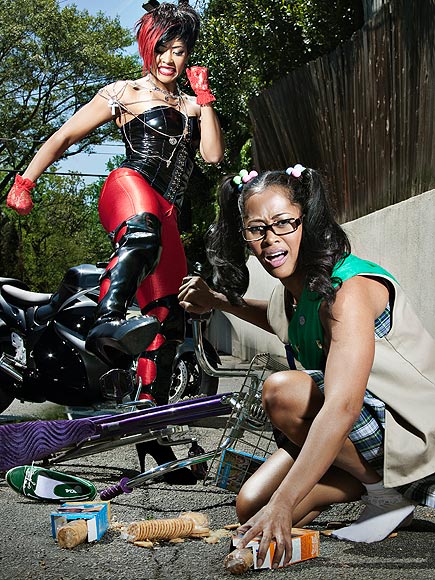
Upon sipping the sweet nectar of the mojito, a mosquito may sometimes spy it's prey. The mosquito may come in many forms, but none of them pretty. The screech of their complaints and disturbance of the peace takes it all away. They might be the person standing in front of you in the queue, a disliked relative, a sassy schoolgirl with socks pulled high, an elderly lady crossing the road. You never do know when the mosquito will attack. But once the drone has hit the conversation and drowned out your Hegelian fantasies with it, the day is never quite the same.


Yet what is it that is so threatening about the mosquito? Well, nothing really. It is more that they disturb the current of what feels good in a situation, sucking the joy out of it for an unnecessary length of time. Upon taking the bus today I observed a prime example of the undercover mosquito: a loud-mouthed passenger. Watching the ticketing system with interest, she tried to shame the driver for no reason other than trying to assert her sense of authority. The seamless situation ruptured, my darkest frown was imparted to her to no avail; the passenger did not notice. And those of the mosquito persuasion never quite do; it's all about their own peace, since they're unable to respect the peace of others. My heart went out to the driver's pride and the tipped mojito, never to be experienced the same again. The mosquito's bitter disease infused the bus, spreading bad blood across its bitten congregation.


The moral of the story? Try not to be a mosquito, if you can help it. Most are considerate and never need to be told. Everyone has a mojito worth saving; the small irritations of life aren't where it's at. It'd just be nicer to not have to walk through their sting to learn the lesson.


Tuesday, 3 January 2012

The Gaol of Greatness

Great. Powerful. Important. It is these words we use to describe who we want to be. Whether we're driven by career, or by popularity, or sex, or possession, the best is where we want to be: better than we are now, or than we can imagine being. The rise of the individual has framed our mindsets to greatness in even the simplest of everyday tasks. Being the best is what drives much of our capitalistic economy, Tall Poppy Syndrome and all.


But what if instead of moving up or becoming more powerful, we could only trade places? Perhaps I should elaborate on trade: trade as in a swapping of places with another person's role in society. Is that even possible, you ask? Well, sure it is - most decisions we make in life are trades. Passenger seat or back seat? To go to uni or not to go to uni? To buy designer or not? To swear or to not to swear? The simplest of choices coalesce together to build societal roles over time that, although not fixed or even true, are perceived by different members of a given society as a particular stereotype. At least, mostly. Not the same stereotype, of course: perception is always relative to where you're sitting. But a particular personality-at-a-glance sense that differs from one person to the next. A personality-at-a-glance sense that communities often share as the same perceived identity. Hobo. Metrosexual. Teeny-boppers. Hermit. Homosexual. Categories like that.


Many of us (without generalizing) think that by moving up particular ladders designated by our society as valued (salary, position, husband/wifedom, beauty) that we'll be better off. However, after a delve into the world of oft-scary literary theory, I stole an idea, or perhaps truth, that we often forget: no societal position is with full benefits. Really, you say? I don't mean necessarily that no position is best because of differing cultural values, or personal beliefs: I mean more that any position is a trade-off for any person. Well sure, you say: moving up requires hard work in almost any circumstance. Well, yes: but the achieved position itself both excludes and includes good things, even if it is seen as higher up on the hierarchy societally. Better is not not necessarily better-off.

I suspect the modern Western mind is so infused with particular ideas of success that this is hard to stomach, perhaps believe. I have to admit the idea was spawned from a queer literary theorist, one of the most marginalized of societal roles. But where else would such an idea come from if not the marginalized? The best way to explain the concept is through illustration. In a society there is always a network of meanings that constitute where a person fits in a given situation: ideas such as class, race, position, financial security. To be a combo of any of these positions is to be enabled in some ways, disabled in others. As a blue-collar worker, one will be accepted by one group of peers but not another. The same goes for a CEO. Both will be seen in particular lights by particular people. Both will be accepted in different situations. Both will be feared in some respects and not in others; both liked and hated in the same way, as judged solely by their societal roles. They will be treated differently by different communities. Higher on the ladder is not always better: just ask a politician. Who to better demonstrate the unenviable position of needing to be liked by a majority that mostly fears or distrusts them? A change of position is not an adding to the qualities you already have: it is a downright exchange.


But why, you say, should this matter? Surely you would rather be feared as a CEO than welcomed as a binman? Well, sure: it all depends what you want out of your situation. I suppose for one starting out in the world of business the idea was a revelation to me; social advertising quickly saturates the mind with who you should aspire to be. And with social track-records like Facebook Timeline to thank, perhaps our role histories will never be removed, our trade-offs always tracked. With our century's increasing focus on everything to do with #self, the idea certainly curbs my idea of freedom. Didn't university, our parents, our society, tell us that we could do everything we wanted? I certainly missed the part where every position excluded some things to include others. Having everything is overrated - the fun's in the struggle. Guess it's just nice to know that the binman, too, has something we don't.

Saturday, 5 November 2011

The Fine Line Between Making the Most of Yourself and Looking Like an Egg


Tarting it up. Preening and Primming. Getting out the big guns. Whatever you want to call it, we all (especially us ladies) do it on a daily basis. It’s that little bit of perfume sprinkled on your jacket, that extra nice pair of earrings you don’t always wear, even that checking that your clothes are stain-free before they meet the public eye (well, hopefully, anyway). It’s called sprucing yourself up, and with a multi-billion dollar beauty industry booming, it seems we’re just that little bit into it.

Lookin' Pretty at the Gym: The Duck Brigade
There’s nothing wrong with a bit of a touch-up now and then. I guess the question here is when it gets out of hand. This whole debate is of course contextual. Working out at the gym is a low-key spruce scenario - your hair can be matted, skin smelly, looks ugly (although this one is a bit of a paradox, as you are indeed going there to improve your looks anyway). But then there’s a few tricky ones. Class. Client meetings. A cheeky one in the pub. Aimless wandering around the streets pretending to do work you should be doing. Do you have to look polished for these activities? Do you look like a dork if you do?


I’m not sure exactly who wrote ‘the rules’, but I gather they certainly do exist. There’s that linger on the person in the room who definitely overstepped the boundaries when it came to personal presentation. There’s that instant shuffling with the person who looks completely out of context. The question is: why do we care? I’m not going to be insulting and say it’s because you believe that what a person looks like actually reflects what they are like inside, let alone their dress. But then they do, in a way. A fashion choice in the wardrobe goes through several key stages: the magical moment, the money, and the modeling. If you can like something enough to be bothered to go through these stages, then in some way the pieces that you wear reflect what you feel like or how you would like to be seen. So to what extent does a dressy missy or hard-out hunk personally resemble the way they dress?

A demonstration of how to naturally finish your set
Besides the fact that I have used the term ‘egg’ in the title as connoting a type of person, there is one other aspect that makes this column unmistakably Kiwi. It is that it assumes there is something wrong with being a ‘hard-out’. Our tall-poppy syndrome can be rather hindering in this sense. We can be successful and elegant, friendly and fun, but there’s always going to be some bitter biatch in the corner that can’t take it. In the matter of people that overdress or dress actually how they would like to (e.g. not in a jeans, t-shirt, hoodie/ Kathmandu jacket plus chucks kind of way), are we as a society just being a bigger, bitterer biatch? What is it to us whether someone likes to wear heels to the football or studs in the workplace? Is it because secretly we think they look fabulous and can't bear to express it? Because we would, underneath, love to rock out some crazy form of hippy gear but don’t have the confidence they have to take it from the closet to the street? Readers, please. There’s enough guys trying to naturally finish their sets without having to comment on someone else’s.


To leave you with a less bitter taste in your mouth: be happy for those who dare to dress up or dress crazy. Secretly, we all know, there’s a part of us like that too. Think about what your dress fantasy is. Pocahontas? The Grudge? Yourself? For the meantime, though, go back to your fearful black cardigans and I-clearly-don’t-care-but-pay-a-lot-of-money-to-not-care Kathmandus. Your peers will thank you for it.

Shakespeare goes Shorty Street

A darkened stage. A shout. A love embrace. It was all very Shakespearean, and it was all very Maidment Theatre. After watching the embrace and wondering what it was like to dance with your face under your lover’s t-shirt, I was serenaded with a cacophony of interpretative dance, raucous voices and imitated drunkenness. It was a nice introduction to a piece which, to my shame, I was simultaneously watching and adding to my literary education. It was also a show appreciated by the audience, who smelt of cologne and alcohol and consisted of many a face off Shortland Street.


For those that do not know the story, it is typically Shakespearean: it starts with a tale of passionately requited love that is forbidden, and ends with a death of the beloved that is a sorely regretted crime of passion. Somewhere in the middle there is a meddling swine that twists everything around, accompanied by many a party to get the festive juices flowing. It is a classical drama of ‘thees’ and ‘thous’, elaborately intensified through classical postures and trained artistic skill.

I must say, as an amateur Shakespearean follower, I did rather admire the way the cast brought the play into the present time and humour. Still true to form and word, they acted remarkably, but were not averse to a few drinking and cheating jokes. Not knowing the story, most happenings in the play were picked up at the start by cues of intonation and body language, upon which one could build the scene with the beauty of old-world language like an artistic trifle cake. It was all very fluid, duly dramatic, and only a little over the top but in the most apt and predictable fashion for a play of such an era.

Remarkable on the stage was lead Robbie Magasiva (Othello), whose anger was gradually built up to the point of bursting shockingly and consistently throughout the story. Otherwise, none were under par but of particular mention was Olivia Tennet (Amelia), whose supporting act showcased her ability to sing, play the violin, dance beautifully and act modest all at the same time. All the characters, it seemed, were truly developed by the last quarter; nevertheless, the whole bunch of them were quite beautiful gym bunnies who contributed in some way to the tale.

Packed to the rafters with much laughter, Maidment’s Othello was certainly a sturdy effort. I would find it hard to pick holes in the performance, and certain scenes were truly delightful (Othello’s discovery of his deception after Desdemona’s murder was particularly heart-wrenching). All in all, a rainy night at the Maidment appeared to rain on a few faces within the theatre, too, a sure indicator of success.

Maidment Theatre. Dir. Jesse Peach. Duration: 2 hours; starring Robbie Magasiva and Matt Minto

The Art of Hustling: Free Shopping as a Gangster’s Paradise

The world is made beautiful by many skills and learned arts. Music, singing, oration, acting, socializing, story-telling. Arts are usually noble, subtly acquired things, like learning how to beat an opponent in a game of chess. They carry an aura of sophistication and you are proud of your leaned art or skill. You, attempting to be modest about it, will subtly brag of your talent, devising situations in which your talent can be put in the spotlight for all to see. Your talent might be a nice pair of legs you worked hard at Les Mills for, or an incredible general knowledge, or an aptitude for putting together a beautiful outfit that is kooky and classy at the same time. Nevertheless, arts are things acquired, admired, and often hired to improve your confidence in front of that daily bathroom mirror.
Until recently I had never regarded hustling as an art. It was always one of those awkward talents that bordered half on embarrassment, half on fun. Your friend might notice someone giving you the eye and hustle a drink through your looks, but you were always left with a taste of seediness in your mouth after the event. You might have worked in a hell-awful call centre, hustling free surveys and minutes of people’s time, always left with a touch of desperation you never really wanted to experience afterwards. Hustling as a form of bargaining was like the guy you would never show to your parents, but would meet in some secret location away from prying eyes: you liked the feeling in the moment, but you didn’t like the consequences. Unclean, humiliating and with a crooked smile, hustling was a part of yourself you didn’t want to truly embrace.


After reflecting on a few of life’s beauties, however, I realized that there was more to hustling. It had hidden virtues and was actually a different entity to the one that I had envisioned. Hustling was a way of life. It did not have to be associated with bad boy rappers and drug dealers, or with people whose desperation had got the better of them. Hustling, indeed, was the art of persuasion. After having heard the other day in one of those oh-so-informative classes that persuasion informed any kind of social agreement or relationship, I realized that hustling too was an important part of any relationship (if you decided to take that theoretical line). Was hustling just persuasion’s dirtier younger cousin? If we persuaded somebody to do something, we were really proud and told all of our friends. But if we hustled something, oh no, ‘that was low’, that was not ‘one of our finer moments’. Hustling had been stereotyped, and I felt bad for him.
Being a charitable person, I decided to try and restore hustling’s good name (did it ever have one?). I applauded those that hustled free drinks or numbers. I began to admire those that could knock money off a dress new to the store that had no defects. I elevated people’s persistence in trying to hustle a good deal out of their next purchase (which had to be over the amount of $20; after all, giving hustling a good name did not have to amount to glorifying stinginess). Consequently, I made a hustling breakthrough. I, the one who had always been embarrassed of trying to get things for free, hustled something of substantial value. I must say, surprisingly, I was rather proud. And why shouldn’t we be? Isn’t it in the nature of New Zealanders to go to Fair Go if they get a bad deal? To try and get the best value for their dollar? To always go the extra mile for customers (which includes getting good service at the other side of the counter)? Hustling had not only lost its shame, but had acquired a kind of national pride, and I loved it.

For those who still despise the hustler, I ask you: have you ever felt the feeling of elation in getting something for free? Did you like the feeling when, after a great bargain you made happen yourself, your wallet was still that bit heavier afterwards? For the unspoken truth is that if human relationships are persuasion, and persuasion equals hustling, then a big part of good socializing is indeed the humble hustle. Hustle friends, hustle contacts, hustle sex if you must. But hustle with your head held high.

Friday, 4 November 2011

Bitchin' on Bad Boys: Why Losers Can Be Alluring

Muscles. Tattoos. Mohawks. Leather jackets. Cigarettes. Whiskey flasks. All these things have one thing in common. Depending on where you live in Auckland it could be your next door neighbour, an imaginary character that you could never even imagine meeting, or a gangster thug from Tarrantino movies. All these things too, are our favourite things. Push the feeling of disgust to the side, and all you have left is sexy. Leather, smoking, half-haired freaks who we like to call the bad guys. Unfortunately, in this case nice guys do finish last.


I am yet to meet a girl who has not been out with a guy of this type. Post break-up, they are always referred to as ‘that loser’, or that ‘bad period in your life’ when you were on self-destruct mode. Because, let’s face it, to date that guy, you had to be. To be honest, when you saw them sidling up the sidewalk with that smirky look and  an unwashed feel, a feeling of ‘ugh’ did seem to shiver down your spine. Then some talking happened, and you went somewhere cool you hadn’t been before, and they became aloof and unreachable and suddenly, well, you kinda liked them. They acquired mystery, and charm, and eventually an irresistible aura because they didn’t give you the approval that that sweet-so-and-so from down the road always did. They were inaccessible. And they had a motorbike. For most teenage girls, this is enough: enough to bypass usual judgment, ignore family and friend’s warnings, and to go down the dirty path of boyfriend badness.

Classiness,  a high calibre of education, and perfect beauty are not enough to stop the luckiest of girls who have the world at their feet swooning for some suave stoner. Being romantic begins to equal romantic suffering, a suffering borne of the reality that the bad boy is an egotist who could only love himself.  But still the love continues on. Ending in some tragic, Romeo and Juliet episode, the bad-boy love affair is one-sided.  The girl believes their love is forever fated, destined despite poverty and substance abuse, meant to be despite his endlessly roving eye. The bad boy, forever his iconic self, thinks of her as hot but needy, replaced by another long-haired lovely to share his sordid sheets.

The question is: what makes the bad boy so appealing? Why, after all their ridiculous escapades and shameful secrets are left exposed, is there nothing left to hate?  The lovable larrikin of the social group, bad boys, I would argue, know the sciences of persuasion and flattery. I say science because, well, it is rather evident that some people fail with a capital F, most are mediocre, and some are euphorically charming in a way that they seem to be born with in the art of social interaction. This charm, if it is not tended to with the care needed for the most beautiful rose, will degenerate into slutdom. And with slutdom comes confidence, with confidence comes apathy, and with apathy comes an anti-establishment attitude. Ever notice that the lovable loser always carries an underlying resentment for authority? I point to the above as evidence for this common and often appealing trait. Most bad boys are, in reality, outsiders.

Gingerbread Man: Modern Man Without the Strings
Outsiders aside, the fact is that many women are romantic creatures. Carrying inside themselves Victorian novels and movies such as The Notebook and other Jennifer Aniston rom-coms, they are taught that there is a moment in their lives that will be their perfect romantic moment. This moment will contain candles, a starlit dinner, a beautiful ball dress and perfect etiquette, a man in a suit and maybe even a ring in his hand. Many women get carried away in these fantasies, reading Cosmo to try and find how they can improve themselves so that this moment can take place in their lives. It is a perfect delusion, and a delusion that is perfect for a master romantic rogue.


But hang on, you say. My ex Steve, or my friend’s ex Gary, or my girlfriend’s ex (that I’m secretly jealous of) was not in a suit with 40’s style hair, would never have lit candles and does not in the least resemble Colin Farrell. The problem is indeed this:  the bad boy does not resemble the fantasy. The catalyst for the bad boy’s chances with a self-respecting woman, however, is not what they look like: it is what they sound like. Women love with their ears. What they might be seeing is a pair of dirty socks, a smoke-filled car and a reddish dope eye, but what they hear is what they have been told they would one day hear as a young, hopeful child. ‘You are the One’, ‘You are the most beautiful woman in the world’ or “I have never loved anyone the way I love you’ are all things that are easy to say but, for the stoner, hard to follow up on. Coupled with the resulting aloofness and unreachability, a girl who thought they once had a poor guy in the palm of their hand begins to feel as if her hand is now guy-poor and, subsequently, she believes she loves him too. It is reverse psychology at its finest, and often hard to escape.

Does it have to be the destiny of every fine girl in Auckland to have gone through the human disappointment of dating a bad boy? It really depends on how fast you can learn. Can you watch your friend go through a similar situation and be able to spot a bad boy from a distance? Could you keep a mental list of what your requirements are in a boyfriend and stick to them regardless of contrary feelings of passion? Unfortunately, many a Kiwi woman cannot. But for the smart ones among us, you only do it the once. Lovable though they may be, alluring though they are, the boredom of their dumb-ass behaviour sets in pretty quick. Make one your boyfriend and your love radar will forever be on the anti-hunt for one that resembles anything close. Love-smart we may not be, but perhaps for a good reason: you don’t make the same mistake twice.

Thursday, 3 November 2011

Distraction Attraction

Celebrities, these days, are everywhere. They have invaded our newspapers, magazines, internet pages, television, life. People talk about them as if they were just Brad and Angelina from down the road. And if they actually know Brad and Angelina? Well, they’ve just jumped a few steps up the fame ladder themselves.

The question is, why do we like celebrities? What, really, is so interesting about them? Being a public relations student, one can see that really they’re normal people with a feisty agent behind them. The agent puts them in shoots, changes their name, gives them a sultry image, and boom: a star is born. Being a celebrity, to my mind, is no longer actually about having talent, like it once (or at least we thought it once) was. It’s about presenting yourself in a light that’s in line with the times, that gives people something new and apparently interesting to look at that’s just a bit different to what’s already out there (not too crazy; then you won’t be mainstream enough to be popular). Being a celebrity, it might seem, is all about presentation.


Presentation is a facet of our world that, especially in the last century, has come to dominate what we see, how we look at it, and whether we buy it or not. Presentation is really a personal word for self-marketing. When you think about it, much of what we see and do not even recognize as presentation is actually just that: female faces on the street (a presentation of make-up products);the city streets (a marketing and upkeep of the city as brand); the words on this page (presentation of information in a readable fashion). So, if much of our world is presentation, and presentation is always something a little better-looking or better placed than our real selves, does that mean that we’re continuously making a commodity of ourselves and our world? Additionally, if celebrities are the pinnacle of the sexy, perfected image that we are looking for, does that mean, subconsciously, that they are some form of super commodity? It all warrants extra room for thought.

If it follows from here that much of our world is commodity, and that celebrities are super-commodities, then the question of societal celebrity adoration simply takes another angle. Celebrities become, then, not just another person we admire because they are the best (or in some celebrity cases, almost the worst), in their field, but because we want to replicate their look. Their look is our ideal. And because ideals never die, but the outfit and the premiere does, we can continue to turn the pages of the latest NW and sigh at the latest. As the post-modernist author Nicholas Carr would argue, humans are suckers for the latest (in that it represents either a threat or opportunity as biological instinct), we are suckers for the newest presentation of celebrities. They are flashy, they represent distraction, and they have just that bit of sexy we want to inject into our lives.


Distraction indeed has a large part to play in all this. As well as living in a packaged world, we live in a world of distraction, a distraction that increases as the days go by. The Internet persuades, the television competes, the I-Phone beeps away to increase to distract us from one product to another: to buy this, to be available for that, to be enticed by the newest and the latest. Even products usually meditative and soothing activities, such as reading, is changing through the Kindle and other e-books, distracting us from the content and onto the links of advertising and dictionary definitions that surround them.


We are attracted to celebrities in that, they too, are tools of distraction. When you turn the pages of a magazine, or the channels the TV (especially E), one celebrity competes with another for your attention, brawn bodies over reclusive geniuses. Movies, good or bad, are made like revolving doors, spurning your interest away from your current duties (which most of us want to be distracted from anyway) and onto their glitzy, glamorous selves.  These Prada-preened goddesses and steroid studs tell us what society wants us to be: ideals, which we must buy their products to attain. To know about these products, you must be distracted by their presentations first. It all makes sense in the consumer cycle.  So it would be safe to say, behind the masks of their agents, celebrities are perhaps so alluring because of their promise of the unachievable. They are distracting because flashy, desirable because unreal, objects of adoration because they represent the everyday perfection we mostly achieve only on nights out.

So as for the question of whether we should adore them or not; well, do at your own peril. It is a rather fickle fantasy to admire something that in many ways is not real. But then again, aren’t most fantasies fun in that they represent something so opposite to the world we live in? We’d all, around study season, rather see Eva Mendes in the mirror than some entity with eye bags and pen on their face. Drugs or not, celebrities are just people hiding behind an agent or an image, a representation of what we ourselves would like to see: societal perfection. It’s just good to remember that in this age of distracting commodities, all you’re really luring after is the flash of the camera.